
The 2016 Casino Bill marked a significant shift in Japan’s gambling landscape. As the country prepares to welcome integrated resorts (IR) that include casinos, the potential influence on the long-established pachinko industry has become a subject of intense debate. While these two forms of entertainment appear to target different market segments, the intersection of these two industries raises questions about their coexistence and future in Japan’s evolving gambling market.
What is the Casino Bill?
The Casino Bill, officially known as the “Act for the Promotion of Development of Specified Complex Tourist Facilities,” was passed in December 2016. This law laid the foundation for the establishment of integrated resorts (IR) in Japan, paving the way for legal casinos to operate in the country. The aim of the bill is twofold: to boost tourism by attracting international visitors and to revitalize local economies through the development of large-scale facilities that combine casinos, hotels, shopping malls, and convention centers.
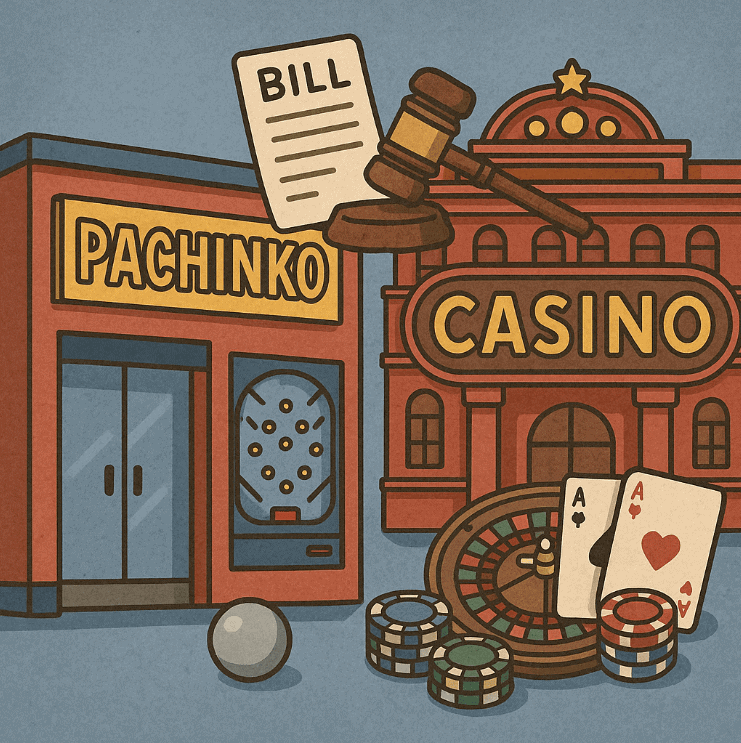
While the primary target audience for these IRs is international tourists, including high-rollers, it also hopes to attract business travelers and enhance Japan’s global competitiveness. By offering not only gambling but a wide range of entertainment options, these resorts are positioned to transform Japan into a more prominent player in the global tourism market.
The Impact of the Casino Bill on Pachinko
Direct Competition
Pachinko, Japan’s iconic gambling form, has traditionally catered to a broad domestic market, with machines that allow players to win prizes in the form of tokens. While pachinko involves elements of luck, it differs from casinos, which feature high-stakes games like blackjack, roulette, and poker. As such, the two industries have not been direct competitors in the past. However, the introduction of casinos could change this dynamic, as some players who are drawn to more sophisticated gambling experiences may transition to casinos, especially those seeking higher stakes or more diverse gaming options.
Regulatory Pressure
The presence of casinos may also lead to stricter regulations for the pachinko industry. As Japan takes steps to ensure responsible gambling, the casino industry will likely serve as a catalyst for increased scrutiny across the gambling sector. This could result in more stringent rules on pachinko payouts, limitations on machine operations, and stricter enforcement of gambling addiction prevention measures. Given the current regulatory environment, the pachinko industry could face heightened pressure to adapt or risk losing its relevance.
The Response of the Pachinko Industry
Targeting Younger Audiences
One of the key challenges facing the pachinko industry is the growing disinterest among younger generations. To combat this, the industry is exploring ways to modernize and appeal to younger, tech-savvy players. Virtual reality (VR) and augmented reality (AR) technologies are increasingly being integrated into pachinko machines to enhance the gaming experience and make it more immersive. By blending traditional gambling with cutting-edge technology, the pachinko industry hopes to attract a new generation of players who are accustomed to the digital entertainment of online gaming.
Additionally, collaborations with esports and the incorporation of online platforms for virtual gambling experiences are part of the strategy to diversify the pachinko offering. These efforts aim to provide new gaming experiences that resonate with younger players who may otherwise turn to mobile or online gaming options.
Adapting to Regulatory Changes
As the Casino Bill ushers in tighter regulations on gambling in Japan, the pachinko industry must evolve to remain compliant. Some pachinko halls have already introduced self-exclusion programs and ID verification systems to curb gambling addiction. These measures are designed to ensure responsible gaming and help rebuild the industry’s reputation.
Moreover, the pachinko industry is likely to face increased pressure to adopt further measures, such as limiting the number of hours players can spend at machines or introducing stricter age verification processes. The implementation of these measures could help secure the long-term viability of pachinko in a highly regulated market.
The Path to Coexistence
Despite the growing presence of casinos in Japan, the pachinko industry has the potential to coexist with these new gambling establishments. Instead of direct competition, both industries may target different demographic groups, allowing them to thrive in parallel. While casinos cater to high-rollers and international tourists, pachinko remains deeply rooted in Japanese culture, particularly for domestic players looking for more accessible and low-stakes entertainment.
Moreover, the possibility of collaboration between the two industries is on the table. Some pachinko operators are exploring the idea of partnering with integrated resorts to create spaces where patrons can enjoy both types of gaming. Such collaborations could create synergies, benefiting both industries by attracting a diverse array of customers.
Conclusion
The passing of the Casino Bill has undeniably transformed Japan’s gambling industry, opening up new opportunities for the casino sector. However, the impact on pachinko is multifaceted. While casinos might lure away some players, the two industries have the potential to coexist and even complement each other. For pachinko, the key to survival lies in adapting to changing preferences, embracing technological advancements, and aligning with new regulatory standards. With the right strategies, pachinko can continue to be a significant part of Japan’s gaming culture alongside the growing casino sector.