What is RNG?
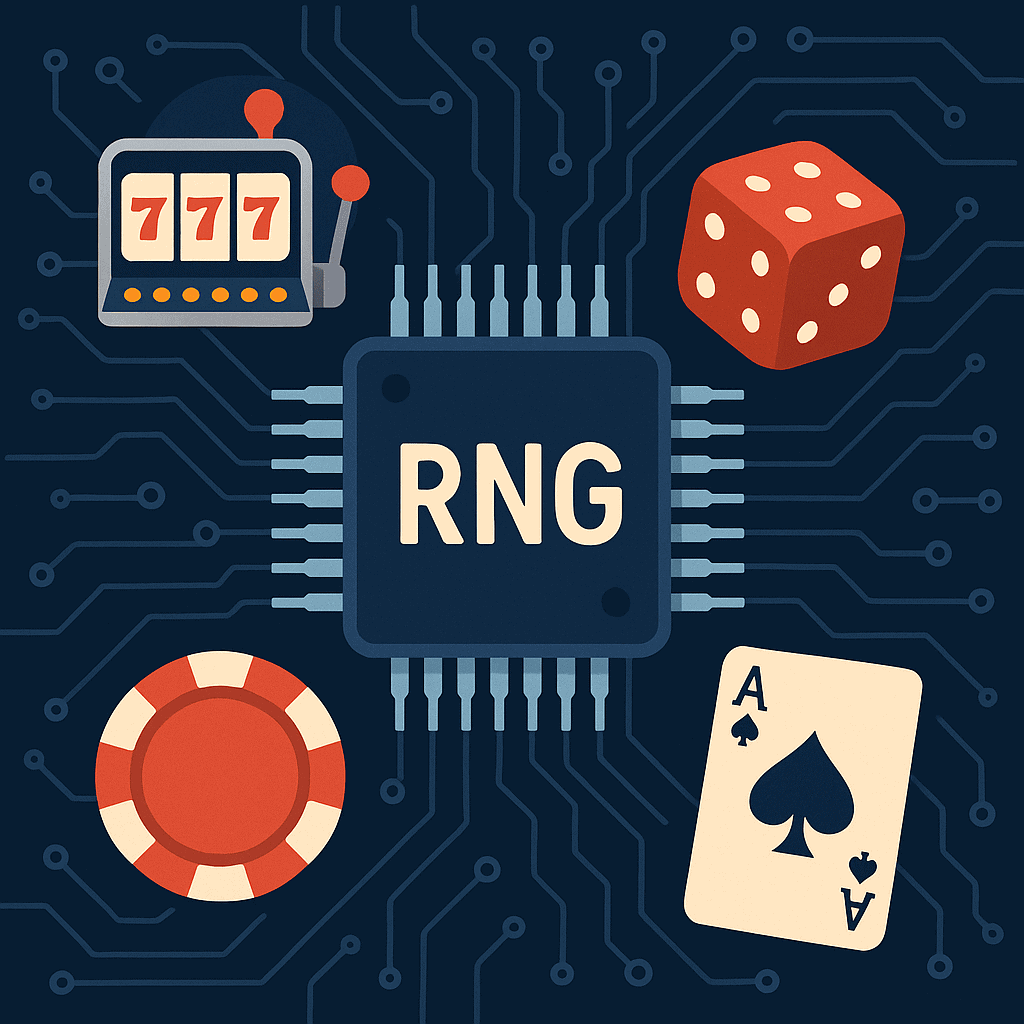
RNG, or Random Number Generator, is an algorithm designed to ensure that all casino games operate based on true randomness. This algorithm guarantees that game outcomes are unpredictable and fair, which is essential to maintain the integrity and trustworthiness of any casino, whether online or land-based.
Without RNG, game results could be manipulated, potentially giving unfair advantage to some players or the house. In other words, RNG continuously produces high-quality, unbiased random numbers that uphold game fairness.
The Concept of Random Numbers
Random numbers refer to sequences of numbers generated without any predictable pattern. This randomness is similar to the unpredictability of dice rolls, lottery draws, or bingo outcomes. The key aspect is that no one can foresee the result, which prevents cheating and ensures fairness.
RNG in Slot Machines
Slots are the most popular casino games, generating approximately 70% of casino revenue both online and offline. Because of this, ensuring the randomness and fairness of slot outcomes is a top priority for casinos.
How RNG Works in Slots
- Land-based casinos: RNG is embedded into the slot machine’s hardware as microchips.
- Online casinos: RNG algorithms are programmed directly into the game software.
These RNGs continuously generate billions of numbers per second, called “seeds.” When a player presses the spin button, the RNG selects one seed, which determines the exact outcome of the spin—such as which symbols appear on which reels and in which positions.
Importance of Seeds
Each seed is linked to specific game conditions, making it possible to verify the exact game outcome even in case of system errors or interruptions. This traceability helps maintain fairness and transparency.
Why RNG is Crucial for Fair Gambling
Imagine a dice game rigged with weighted dice to favor certain outcomes—this would be clearly unfair. RNG ensures that gambling remains unbiased and trustworthy by providing true randomness.
Historically, there have been rumors and concerns about manipulation in physical gambling machines, such as pachinko or slot machines in Japan. Today, modern machines rely on embedded RNGs to deliver fair play, preventing any hidden manipulation.
Types of RNG and Their Auditing
Casino games undergo rigorous testing by internationally recognized authorities such as:
- Malta Gaming Authority (MGA)
- UK Gambling Commission (UKGC)
Independent testing agencies—such as eCOGRA, iTech Labs, and GLI—audit RNG software for:
- True randomness (statistical unpredictability)
- Absence of reproducible patterns
- Correct Return to Player (RTP) calculations
- Detection of software bugs or anomalies
These certifications assure players that the games they play are fair and reliable.
Hit Frequency and Volatility
Two important concepts tied to RNG in slots are:
- Hit Frequency: The probability of winning on a given spin, or how often players experience wins.
- Volatility: The risk level of the game, reflecting the size and frequency of wins.
They generally have an inverse relationship:
| Hit Frequency | Win Size | Volatility |
| High | Small | Low |
| Low | Large | High |
Casinos may adjust hit frequency to balance player satisfaction with game fairness, ensuring an engaging experience without compromising randomness.
Conclusion
RNG is the backbone of fairness in online and land-based casino games. Through continuous generation of random seeds, strict regulatory audits, and the careful balance of game mechanics like hit frequency and volatility, RNG protects both players and casinos from unfair practices. Understanding RNG helps players trust that every game outcome is genuinely random and fair.